
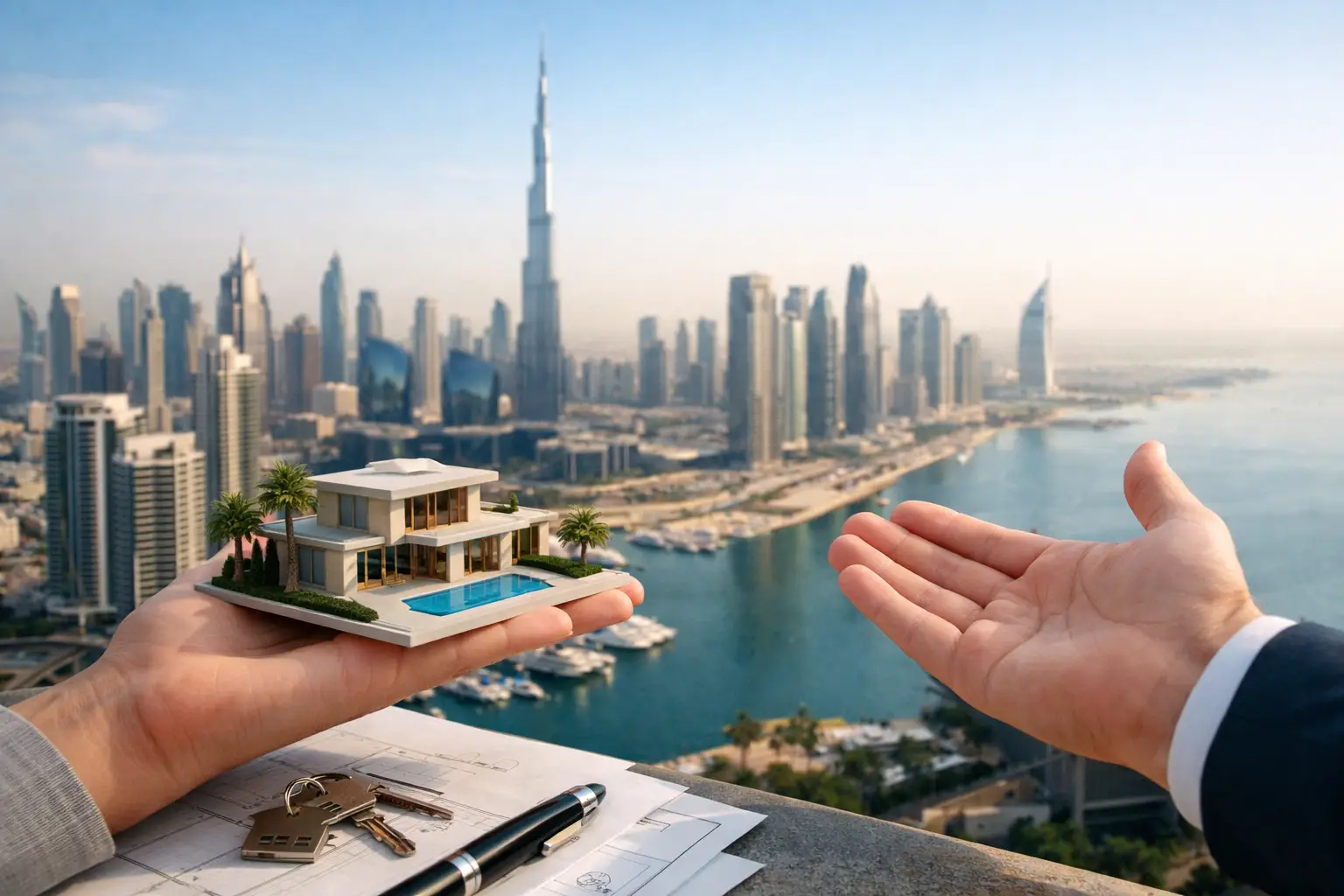
A market that can still deliver rental yield, capital growth potential, and tax efficiency at the same time gets attention fast. That is the core of why Dubai for real estate investment is a serious question for investors, not just a marketing headline. Dubai has built a property market that appeals to buyers who want income, optionality, and a relatively straightforward ownership environment.
For US-based investors and international buyers, the appeal is not based on one factor alone. Dubai works because several investment drivers line up at once - population growth, business inflows, major infrastructure, active development, and a legal framework that has matured significantly over time. That combination matters more than any single statistic.
Why Dubai for real estate investment stands out
Most property markets force a trade-off. You may get stability but low returns, or stronger returns with higher legal and operational friction. Dubai often enters the conversation because it can offer a more balanced profile.
Gross rental yields are one of the biggest reasons. In many mature global cities, yields on residential property can be compressed to levels that make leveraged or income-focused investing less attractive. Dubai, by contrast, has historically offered stronger rental performance in many communities, especially when the asset is selected well and pricing discipline is maintained at purchase.
The tax side also gets attention. Dubai does not impose annual property tax in the way many US and European investors are used to, and there is no tax on rental income at the local level in the same traditional sense. That can materially improve net returns, although each investor still needs advice on tax treatment in their home country. The local structure is attractive, but cross-border tax planning still matters.
Then there is liquidity and demand depth. Dubai is not a niche second-home market. It is a large, active city with a diverse resident base, tourism demand, executive relocation, and continuing business formation. That creates multiple demand pools across sales and rental segments.
A market supported by population and business growth
Real estate performs best when demand has a real economic base behind it. Dubai benefits from being a regional business hub with a growing population and a steady stream of professionals, entrepreneurs, and companies setting up operations.
That demand shows up directly in housing. New residents need rental homes first, and many later become buyers. Employers relocating staff, families moving for long-term work, and investors seeking short- or long-term rental income all support absorption. For landlords, that matters because occupancy is not just driven by seasonal interest. It is tied to the city’s broader economic activity.
Government-led planning also adds a layer of confidence. Dubai has invested heavily in transportation, logistics, retail, and mixed-use development. When infrastructure expands alongside residential communities, it helps support both end-user demand and resale appeal. Investors are not only buying an apartment or villa. They are buying into a district’s long-term usability.
Rental yield is a major part of the answer
If the question is why Dubai for real estate investment, yield is usually near the top of the answer. Income-focused buyers often compare Dubai with cities where entry prices are high but rent growth is limited. In Dubai, there are still communities where acquisition cost and rental potential align more favorably.
That said, not every property produces the same result. Yield depends on location, unit type, building quality, service charges, tenant profile, and whether the asset is positioned for long-term rental or short-term stays. A high quoted yield can look less compelling after vacancy, maintenance, and management costs are factored in.
Studios and one-bedroom units in well-connected communities often attract investors because they can be easier to rent and may produce stronger percentage returns. Larger units can also work well, especially in family-focused areas, but the strategy is different. The key is to match the property to actual demand rather than buy based only on brochure projections.
Tax efficiency improves the investment case
One of Dubai’s strongest advantages is how tax-efficient the ownership environment can be compared with many other global markets. For investors used to recurring annual property taxes, municipal burdens, or locally taxed rental income, Dubai can look structurally more favorable.
This does not mean transaction costs disappear. Buyers still need to account for transfer fees, registration costs, service charges, and financing expenses where relevant. Those costs affect returns and should be modeled upfront. But from a holding perspective, Dubai remains attractive because ongoing tax drag is relatively low.
For international investors, the practical point is simple: lower local taxation can improve the math, but the final net return depends on how income and gains are treated in the investor’s country of residence. Smart investing here still starts with a full cost view, not just headline tax benefits.
Off-plan and ready property give investors two different paths
Dubai offers unusual flexibility because both off-plan and ready property are active parts of the market. That allows investors to choose a strategy that matches their timeline and risk tolerance.
Off-plan properties are often attractive because of lower entry pricing, staged payment plans, and stronger upside if bought early in the development cycle. For investors focused on capital appreciation, this can be compelling. The trade-off is time. Income usually does not begin until handover, and project quality depends heavily on the developer’s credibility and delivery standards.
Ready properties suit investors who want immediate rental income, visible product quality, and established community performance. You can inspect the unit, review actual market rents, and assess building management more directly. The trade-off is that entry prices may be higher, and the upside from launch-to-handover appreciation is no longer available.
Neither route is universally better. It depends on whether the investor is prioritizing cash flow now, growth later, or a blend of both.
Regulation and transparency matter more than they used to
Investors do not just buy returns. They buy confidence in the system behind those returns. Dubai’s property market has become more structured over time, with stronger regulatory oversight, developer controls, escrow requirements for many projects, and clearer transaction processes than in its earlier growth phases.
This does not remove risk entirely. Market cycles still happen, and due diligence still matters. But the framework is more mature than many outside observers assume. Title registration, brokerage processes, and transaction administration are more organized than the market’s older reputation might suggest.
For first-time overseas buyers, this is one of the most underrated reasons Dubai remains attractive. A market can have strong numbers, but if the buying process feels unclear, investors hesitate. Dubai’s continued development as a regulated, globally accessible market helps reduce that friction.
Location selection is where returns are made or lost
A strong city does not make every property a strong investment. This is where many buyers get the market partly right and the asset selection wrong.
Community fundamentals matter. Access to transport, schools, employment zones, retail, and lifestyle infrastructure all influence rentability and resale demand. So does future supply. An area with heavy upcoming inventory may still perform well, but investors need to understand how that supply could affect pricing power and vacancy.
Property-specific factors matter just as much. Service charges can materially reduce net yield. Building reputation can influence tenant retention. Layout efficiency affects both rental demand and resale appeal. Even within the same community, two units with similar square footage can perform very differently.
This is where a transaction-oriented advisory approach becomes useful. Firms such as LE Properties work best when they are not only showing inventory but helping buyers compare the real investment logic behind each option.
The trade-offs investors should keep in mind
Dubai is attractive, but it is not a passive market where any purchase works. Prices can move quickly. Some segments become crowded. Off-plan launches can create noise that distracts from actual value. And financing terms for non-resident buyers may differ from what US investors expect at home.
Currency exposure is another consideration. Buyers investing from outside the UAE should think about exchange rate effects, especially on repatriated returns or financing structures. Management also matters if the property is held from abroad. A good rental strategy can underperform if leasing, maintenance, and tenant communication are not handled properly.
The investors who usually do best in Dubai are the ones who treat it like a real operating asset, not a speculative shortcut. They underwrite costs carefully, choose communities with durable demand, and align the property with a clear holding plan.
So, why Dubai for real estate investment?
Because few markets combine income potential, tax efficiency, global demand, and product choice as effectively as Dubai does. It offers entry points for different budgets, strategies for both yield and appreciation, and a maturing market structure that supports investor participation.
That does not mean every property is a good buy or every cycle is the right moment to chase price momentum. It means Dubai gives investors more workable paths than many competing cities, provided the decision is grounded in numbers and not hype.
A useful way to approach the market is simple: start with your objective, then choose the property that fits it. If the asset, location, and timing all line up, Dubai is not just an interesting market to watch. It is a market where a well-planned purchase can do real work for your portfolio.






