
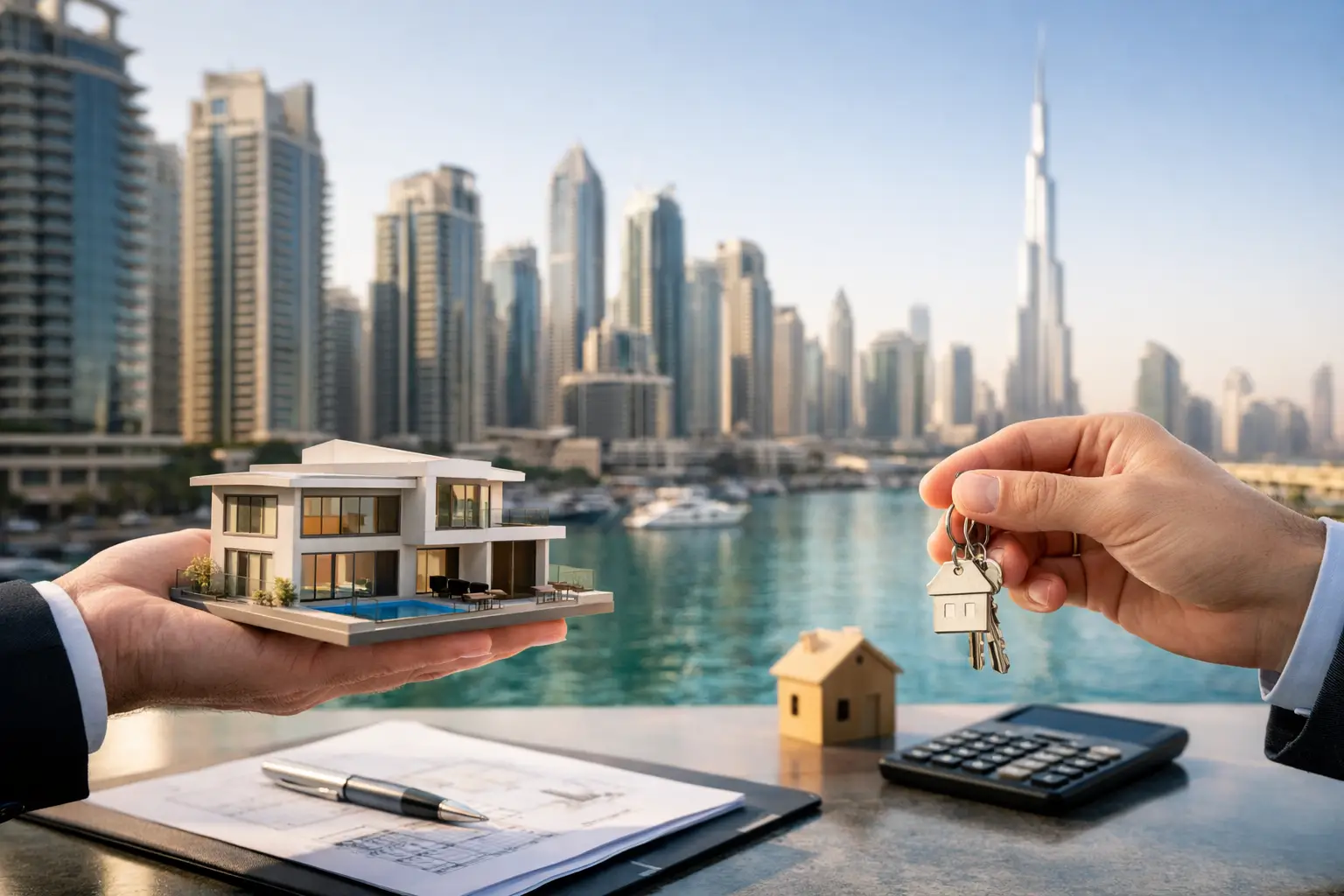
A buyer wiring six or seven figures into an overseas property market is not looking for hype. They want to know one thing first: is it safe to buy property in Dubai? The short answer is yes, for many buyers it is safe, but only when the property, developer, contract terms, and payment structure are properly checked. Dubai is a regulated market with established ownership laws, escrow protections for many off-plan projects, and a mature transfer process. The real risk usually comes from buying the wrong asset, misunderstanding the terms, or relying on incomplete advice.
Dubai has spent years building confidence among foreign investors. That matters because this is a market that actively welcomes international ownership in designated areas. It also matters because safety in real estate is not just about crime or politics. For buyers, safety means legal clarity, title security, reliable transfer procedures, developer accountability, and a realistic path to holding or reselling the asset.
Is It Safe to Buy Property in Dubai for Foreigners?
In practical terms, Dubai is one of the more accessible property markets for foreign buyers. Non-UAE nationals can buy property in approved freehold areas, and the process is generally straightforward when handled correctly. The framework is supported by the Dubai Land Department, with title registration and formal transfer procedures that help reduce the kind of informal risk buyers worry about in less organized markets.
That said, accessible does not mean risk-free. A foreign buyer still needs to verify whether a property is truly freehold, whether the seller has the right to sell, whether there are outstanding service charges or mortgage obligations, and whether the price reflects current market conditions. Safety comes from the system, but also from discipline.
What makes Dubai property ownership relatively secure
The strongest case for Dubai comes from regulation and process. Property ownership is documented through official registration, and that creates a clearer chain of title than in many emerging markets. Buyers are not operating in a purely private, handshake-driven environment.
For off-plan property, escrow rules are one of the most important protections. In many cases, buyer funds for a project are tied to regulated escrow arrangements rather than flowing directly into unrestricted developer use. That does not eliminate development risk, construction delays, or quality concerns, but it does improve buyer protection compared with unregulated presale markets.
The market also benefits from a high volume of international transactions. That has pushed brokers, developers, banks, and legal support providers toward more standardized procedures. For an investor, standardization is not exciting, but it is useful. It lowers the chance of avoidable errors and makes due diligence easier to structure.
Where the real risks are
When people ask whether Dubai property is safe, they are often asking the wrong question. The city itself is not the main source of risk. The transaction is.
One common issue is overpaying for a property that looks attractive on a brochure or portal but lacks rental strength, resale demand, or solid location fundamentals. A safe legal transaction can still become a weak investment.
Another risk sits in the off-plan segment. Off-plan can offer strong upside, flexible payment plans, and lower entry pricing, but buyers are taking developer and execution risk. Delivery timelines may move. Final layouts or finishes may vary. Market conditions can change by handover. If the developer has a strong track record and the project is well positioned, those risks may be acceptable. If not, they can become expensive.
Ready property has a different profile. You can inspect the unit, assess the building, review occupancy, and estimate income more directly. But ready units are not automatically safer. Older buildings may carry higher maintenance costs. Some units underperform because of layout, view, floor level, or building management standards.
Legal safety depends on due diligence
The safest buyers in Dubai are rarely the fastest buyers. They are the ones who verify everything before signing or transferring funds.
Start with ownership status. The property should be checked through official documentation, including title details and the seller's authority to dispose of the asset. If the property is mortgaged, that needs to be understood early because it affects the transfer sequence.
Then review the financial obligations attached to the asset. Service charges, payment schedules, transfer fees, trustee office costs, agency commissions, mortgage fees, and maintenance exposure can materially change the economics. A purchase that looks straightforward at the listing stage can look very different once all transaction costs are added.
If the purchase is off-plan, the buyer should review the developer's reputation, prior handovers, build quality history, and actual delivery record. Marketing material is not enough. A polished launch does not guarantee a strong completed product.
Contract terms also matter. Reservation forms, sale agreements, payment plans, default clauses, late payment penalties, and handover conditions should all be clear before commitment. Buyers sometimes focus heavily on price per square foot and ignore the legal mechanics that determine what happens if something goes wrong.
Is it safe to buy property in Dubai as an investment?
It can be, especially for buyers who approach Dubai as a yield and growth market rather than a purely emotional purchase. The city attracts investors because of its tax environment, international demand base, infrastructure growth, and range of asset types across budget levels. In the right area and product category, rental returns can be compelling compared with many mature global cities.
Still, investment safety depends on fit. A short-term rental strategy may work well in one location and fail in another. A family-oriented community may deliver stable long-term occupancy but lower short-term upside. A luxury tower may offer prestige but more volatile resale demand. The market gives buyers options, but options increase the need for clear strategy.
For first-time investors, safety often means choosing a property with broad demand rather than chasing the most aggressive projected return. Studio and one-bedroom apartments in established areas, for example, may appeal to a wider tenant and buyer pool than highly specialized inventory. That does not make them the best choice for every investor, but it does make them easier to evaluate.
What buyers should check before moving forward
A sensible Dubai purchase starts with five practical questions. Is the area supported by real demand, not just launch momentum? Is the property type aligned with the intended exit or rental plan? Is the developer or building manager credible? Are the full acquisition and holding costs understood? And can the buyer comfortably hold the asset if market conditions soften?
Those questions are more useful than asking whether all Dubai property is safe or unsafe. The market is large. Outcomes vary by neighborhood, building, developer, and timing.
Buyers should also be realistic about financing and currency exposure. If your income is in US dollars, one set of assumptions may apply. If your income or liabilities are in another currency, the risk picture changes. If you are using leverage, interest costs and repayment terms matter just as much as rental yield.
Working with an organized brokerage can help reduce friction, but the value is not just access to listings. It is the ability to compare projects, assess trade-offs, and pressure-test the numbers before commitment. That is especially relevant for overseas buyers who cannot inspect every option personally.
When Dubai may not be the right fit
Dubai is not automatically a safe choice for every buyer profile. If you need guaranteed returns, real estate is the wrong asset class. If you are uncomfortable with market cycles, off-plan uncertainty, or active management decisions, the market may feel more exposed than expected.
It may also be the wrong fit if your time horizon is too short. Transaction costs and normal market movement can make quick flips less predictable, especially outside unusually strong growth periods. Buyers who do better in Dubai usually enter with a clear purpose, enough liquidity, and a willingness to choose quality over urgency.
For many investors and end users, Dubai offers a well-regulated and commercially attractive property market. But safety is not created by the city name alone. It comes from buying the right property, under the right terms, with the right checks in place. If you treat the transaction seriously, ask better questions, and focus on asset quality over sales pressure, Dubai can be a market where confidence is earned rather than assumed.






