
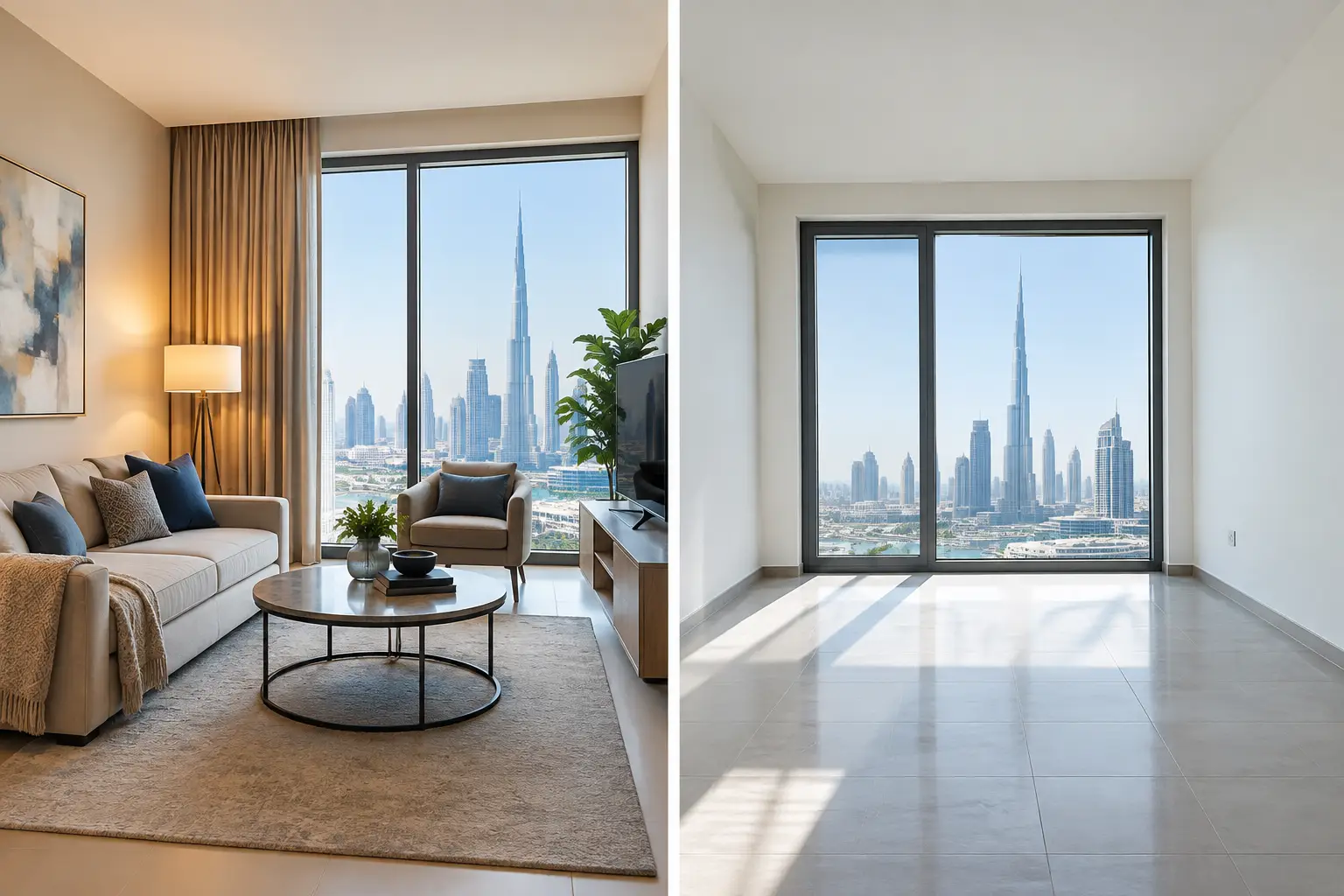
A one-bedroom in Dubai Marina can look like two entirely different rental propositions depending on what comes with the keys. One may be ready for a new arrival with furniture, appliances, and kitchenware. The other may offer a lower annual rent but require a tenant to furnish it from scratch. That is the practical decision behind furnished versus unfurnished Dubai rentals - and the better option depends on how long the tenant plans to stay, or how the owner intends to operate the asset.
For renters, the choice affects upfront spending, convenience, and flexibility. For landlords and investors, it influences target demand, operating costs, maintenance exposure, and the achievable rental premium. Neither format is automatically more profitable or more affordable. The right answer begins with the property, location, and intended tenant.
Furnished Versus Unfurnished Dubai Rentals: The Core Difference
A furnished rental should provide the essentials required for normal day-to-day occupancy. In Dubai, this commonly includes major furniture, kitchen appliances, beds, seating, dining furniture, wardrobes, and basic household equipment. However, the exact standard varies widely. A basic furnished unit and a professionally equipped, move-in-ready apartment are not the same product, even when both are advertised as furnished.
An unfurnished property generally includes fixed elements such as fitted kitchen cabinets, bathrooms, built-in wardrobes, air conditioning, and sometimes major appliances. The tenant supplies movable furniture and personal household items. Some listings sit between the two categories, with appliances but no furniture, or partial furnishing. The inventory should always be confirmed before an offer is made.
For both parties, the written tenancy agreement and inventory record matter more than the marketing label. A landlord should document each supplied item, its condition, and any existing wear. A tenant should inspect the property carefully at handover, photograph material defects, and ensure those observations are recorded. This avoids disagreement over deposits when the lease ends.
What Renters Should Compare Beyond the Advertised Rent
The annual rent is only one line in the cost of a Dubai move. A furnished apartment may command a higher rent, but it can reduce the need for immediate purchases, delivery arrangements, and the difficulty of reselling furniture later. It is often a practical option for professionals relocating to Dubai, tenants on fixed-term assignments, students, or households still deciding where they want to settle long term.
An unfurnished apartment can make stronger financial sense for a tenant planning to remain in Dubai for several years. The starting rent may be lower, and the resident has control over the quality, style, and replacement schedule of their furniture. It also eliminates the restriction of living around someone else’s chosen interiors.
The key is to compare total occupancy cost over the likely lease period. A tenant considering a furnished unit should ask whether the additional annual rent is less than the cost of buying, transporting, and eventually disposing of furniture. A tenant choosing unfurnished should budget for beds, sofas, dining furniture, curtains where needed, appliances not included, and installation or delivery charges.
Deposit requirements can also differ. Furnished homes often require a higher security deposit because the owner’s contents are at risk. Lease payment terms, agency fees, utility activation costs, building access charges, parking, chiller arrangements, and internet are separate considerations that should be clarified before signing.
When Furnished Is Usually the Better Tenant Choice
Furnished rentals tend to suit tenants who value speed and low setup effort over full personalization. This is especially true in areas with high mobility and international demand, such as Dubai Marina, Jumeirah Lake Towers, Downtown Dubai, Business Bay, DIFC, and parts of Palm Jumeirah.
They can also work well for a newly arrived tenant who wants to learn the city before committing to a long-term furniture purchase. A ready-to-occupy property makes it easier to move quickly after securing employment, relocating a family, or transitioning between homes.
When Unfurnished Is Usually the Better Tenant Choice
Unfurnished homes are often preferred by established residents, families, and tenants bringing their own furniture from a previous property. Villas and larger apartments frequently attract this audience because longer stays are more common and residents want to create a home around their own needs.
For a tenant who expects to renew for multiple years, furnishing an empty unit can be a reasonable investment. The decision is stronger when the property offers a meaningful rent saving and the tenant is comfortable handling the initial setup.
The Landlord and Investor Calculation
For landlords, furnishing is not simply a way to charge more rent. It is an operating model. The potential upside is a higher asking rent and access to a broader pool of move-in-ready demand. The added responsibilities include capital expenditure, replacement cycles, cleaning, inventory checks, repairs, and the risk of damage or loss.
A furnished property can be particularly compelling in compact apartments located near business districts, transit, beaches, or major employment centers. Studios and one-bedroom units often appeal to professionals who prioritize convenience. In those markets, a well-presented furnished apartment may lease faster than an empty equivalent, provided the pricing remains competitive.
Yet a premium only works when the furnishing level supports it. Low-quality or mismatched furniture rarely justifies a significant increase in rent. Tenants comparing several apartments can quickly see whether the owner has invested in durable beds, usable storage, practical dining space, maintained appliances, and clean finishes. Presentation affects both inquiry volume and negotiating power.
Unfurnished rentals can offer a more straightforward, lower-maintenance strategy. The landlord avoids furnishing expenditure and has fewer movable items to inspect or replace. This format can be well suited to larger residences and communities where the tenant profile is family-oriented and lease durations may be longer. Stable occupancy can be more valuable than chasing a small rent premium with frequent turnover.
Calculate Net Return, Not Just Gross Rent
An investor evaluating furnished versus unfurnished Dubai rentals should model the net income under both scenarios. Start with expected annual rent, then account for furnishing purchase costs, depreciation, repair allowance, vacancy periods, cleaning, and management time. Furniture has a finite life, particularly in high-turnover units.
For example, a furnished apartment may achieve a higher rent but require a substantial initial fit-out and periodic replacement of mattresses, sofas, appliances, and small household items. If the property is vacant longer between tenants or the inventory suffers repeated damage, the gross premium can disappear. Conversely, in a high-demand micro-location, a professionally furnished unit may reduce vacancy and produce a stronger net result.
The analysis should also consider the investor’s exit plan. Furniture can help a property photograph well and attract tenants quickly, but it does not always add equivalent value at resale. Buyers may have different preferences, and an owner should avoid overcapitalizing on a unit where the market will not reward the added spend.
Location and Property Type Should Lead the Decision
There is no single furnishing strategy for Dubai. A studio near a commercial center serves a different market from a three-bedroom villa in a family community. The first may benefit from turnkey furnishing and flexible appeal. The second may be more attractive as an unfurnished home where tenants can establish themselves over several years.
Study comparable listings in the same building or immediate community, not just the wider district. Look at asking rents, achieved rents where available, time on market, unit size, views, parking, upgrades, and furnishing quality. A furnished unit should be compared against other furnished units with a similar standard. Otherwise, the expected premium may be unrealistic.
Seasonality and tenant demand also matter. Dubai’s rental market moves with corporate relocations, school calendars, new supply, and changing preferences between apartments and villas. Pricing should be reviewed against current market conditions rather than set solely by the owner’s furnishing cost.
Practical Checks Before Signing or Listing
A furnished lease needs more detail at handover than an unfurnished one. Owners should provide an itemized inventory, test appliances, retain manuals where practical, and establish a clear process for reporting maintenance issues. Tenants should confirm what will remain in the property and whether any items shown in listing photos are excluded.
Both parties should also make sure the tenancy contract reflects the agreed terms, including payment schedule, maintenance responsibilities, notice provisions, and any furnishing-specific conditions. The tenancy should be registered through the applicable Dubai process, and all documents should match the actual arrangement.
A good rental decision is rarely about whether furniture is present. It is about matching the lease format to the tenant’s timeline and the owner’s return strategy. Choose the option that makes the property easier to rent, easier to maintain, and financially sensible for the period ahead.






