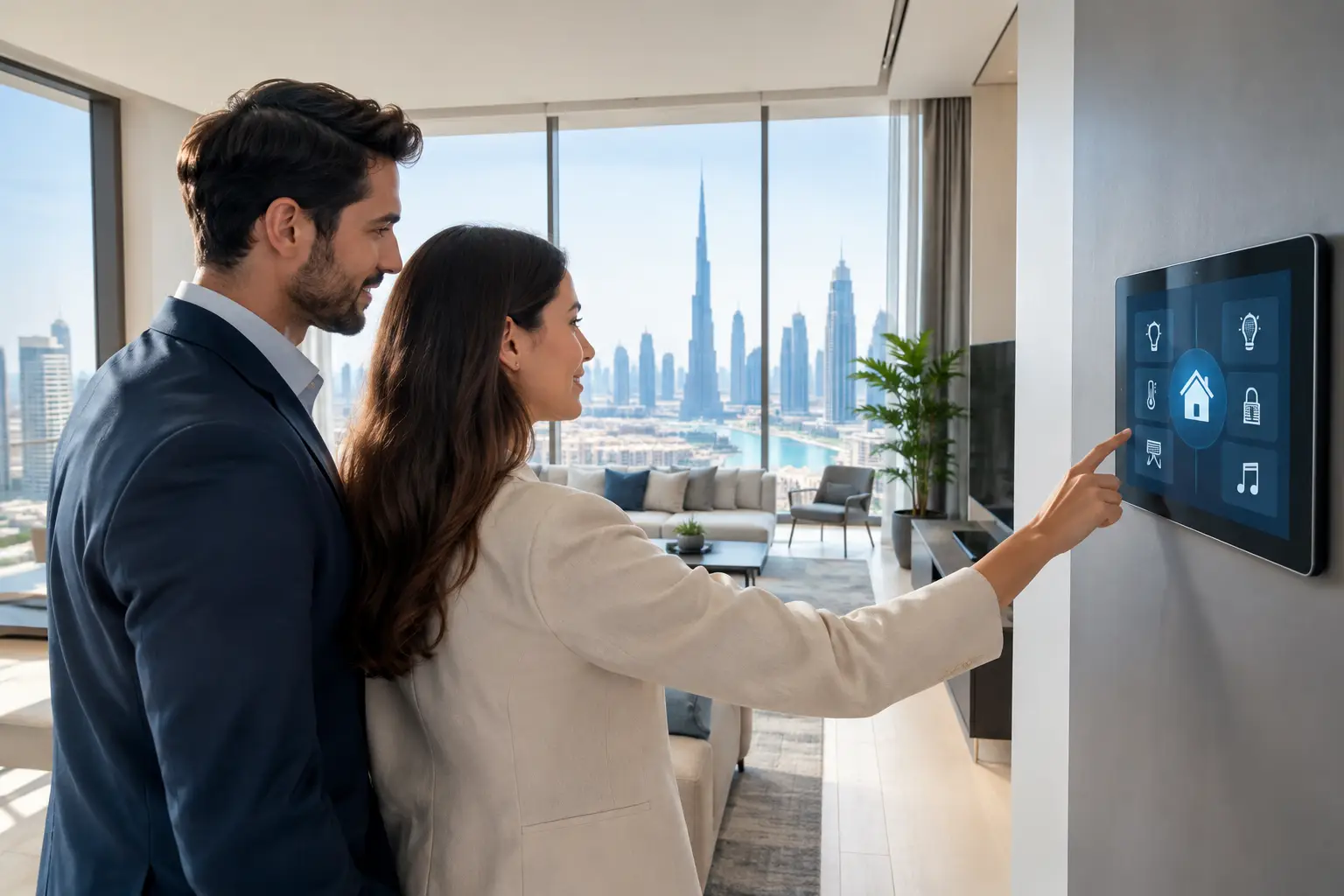
A residence that opens the curtains at sunrise, adjusts the temperature before you arrive, and lets you check a door lock from overseas can be appealing. But Dubai smart homes are not automatically better investments simply because they have an app-controlled lighting system or a voice assistant. For buyers and investors, the value lies in how well the technology works, who controls it, what it costs to maintain, and whether it supports the property’s position in the market.
In Dubai, smart-home features are appearing across new apartments, villas, and branded developments. They can improve daily convenience and help a listing stand out, particularly in premium rental markets. The buying decision, however, should still begin with the fundamentals: location, build quality, layout, service charges, expected rental demand, and the developer’s delivery record. Technology should strengthen those factors, not distract from weaknesses in them.
What Makes a Home Smart in Dubai?
A smart home uses connected devices and automated systems to manage functions that would otherwise require manual control. The level of capability varies widely. One property may offer only smart switches and a video intercom, while another may have integrated control of lighting, climate, curtains, security cameras, access, entertainment, irrigation, and energy monitoring.
For a buyer, the key distinction is between installed devices and an integrated system. A few Wi-Fi-enabled products can be useful, but they do not necessarily create a well-designed smart home. An integrated setup is planned around the property, has clear control options, and can continue operating without requiring the owner to replace multiple disconnected products after handover.
This matters especially in apartments. Building-level systems, such as access control, visitor entry, elevators, parking barriers, and common-area security, may be managed separately from the technology inside the unit. Ask what is included within the apartment or villa and what remains under the building management’s control.
Dubai Smart Homes and Buyer Due Diligence
Smart features should be inspected with the same care as appliances, finishes, and air conditioning. Marketing materials can describe a home as connected without explaining how the system performs after completion. Before making an offer or reserving an off-plan unit, buyers should request practical answers rather than relying on broad claims.
Confirm what is included at handover
Ask for an itemized specification of the installed smart-home equipment. This should identify the controls, hubs, panels, sensors, locks, cameras, thermostats, switches, and compatible mobile applications. Clarify whether features shown in the showroom are standard, optional upgrades, or only illustrative.
The distinction can be significant. A developer may provide smart lighting controls in living areas but not bedrooms, or pre-install wiring for curtains without supplying motorized tracks. A villa may have provisions for cameras and gates, while the buyer must purchase the actual equipment. Knowing the handover scope prevents unexpected upgrade costs later.
Test the user experience, not just the showroom display
During a viewing, operate the system yourself. Test the wall panels, mobile app, voice control if available, door access, and automated scenes. Check whether the controls are intuitive for a tenant, family member, or property manager who did not install them.
A system that requires several applications or complicated setup can become a source of frustration. It may also reduce its usefulness as a rental feature. Tenants usually value reliable controls for cooling, access, lighting, and entry more than a long list of functions they are unlikely to use.
Internet connectivity is another practical issue. Many smart devices depend on a stable network. Confirm how the system behaves during a Wi-Fi outage, whether essential lighting and climate controls can still be operated manually, and whether the property has adequate network coverage in all rooms. Larger villas may require professional network planning rather than a single consumer router.
Understand ownership, accounts, and data access
At resale or tenant turnover, the outgoing owner must be able to transfer control of the smart-home system. Ask whether accounts are registered to the unit, the owner, the developer, or a third-party provider. Determine how passwords, administrator access, digital keys, and camera permissions are removed or reassigned.
Privacy requires the same attention. If cameras, video doorbells, or access logs are included, establish where footage is stored and who can access it. For an investment property, a clear handover process protects both the landlord and tenant while reducing operational issues between leases.
Review warranty and maintenance responsibilities
Smart devices have a shorter replacement cycle than the building itself. A premium apartment may retain its location advantage for decades, while certain controllers, apps, and wireless standards can become outdated much sooner. Ask about the warranty period, local technical support, maintenance contracts, and replacement availability.
Also check whether the system depends on a subscription. Some security, cloud storage, automation, and remote-monitoring services carry recurring fees. These costs may be modest, but they should be included in the property’s annual ownership budget alongside service charges, insurance, maintenance, and financing costs where applicable.
Smart Features That Can Matter to Investors
For investors, smart technology should be assessed through rental positioning and operating efficiency. It may help a property attract tenants who want convenience, particularly in newer communities, executive rentals, and higher-priced units. It is less likely to compensate for an inconvenient location, limited parking, poor layout, or an oversupplied building.
Climate control can be one of the more useful features in Dubai. Programmable thermostats and occupancy-aware settings may help residents manage cooling use, although the financial impact depends on building design, tenant behavior, utility arrangements, and the system’s setup. Do not assume energy savings without reviewing how the property is metered and who pays the utility bills.
Remote access can also make property management more efficient. A landlord can coordinate entry for maintenance, monitor a vacant unit, or verify that systems are functioning between tenancies. Yet this convenience comes with responsibility. Tenants should have clear control over their living space, and landlords should avoid retaining unnecessary access to cameras or interior systems during an active lease.
For furnished rentals, a simple and dependable package can be more valuable than advanced automation. Smart locks, climate scheduling, leak sensors, and clear entry controls often provide practical benefits. Complex entertainment systems or highly customized controls can create more support requests unless a professional manager is available.
Off-Plan Versus Ready Smart Properties
Off-plan buyers have the opportunity to purchase a home with technology designed into the development from the start. The potential benefit is cleaner installation, centralized controls, and modern infrastructure. The trade-off is that buyers are relying on plans, specifications, and the developer’s final delivery.
Review the sales agreement and specification schedule carefully. Confirm whether the developer can substitute brands or systems, what happens if a named technology is discontinued, and whether upgrades can be selected before completion. If smart-home capability is central to the purchase decision, ask for written confirmation rather than accepting verbal assurances.
Ready properties offer a different advantage: you can inspect the actual setup. This is especially useful for resale villas, where previous owners may have added systems at different times. Check the quality of installation, the condition of wiring, the availability of manuals, and whether the system can be reset and transferred without disrupting other building functions.
A ready unit may also reveal an important issue that plans cannot: whether the technology has been used consistently or has become an expensive feature that the owner rarely touches. Signs of neglected devices, obsolete screens, unsupported apps, or improvised wiring deserve attention during the technical inspection.
Choosing the Right Property, Not Just the Right Features
The strongest smart-home purchase is one where technology aligns with the buyer’s actual strategy. An owner-occupier may prioritize ease of use, security, and comfort. A long-term landlord may place more value on durable systems and low maintenance. A short-term rental investor may focus on controlled access and simple remote management, subject to applicable licensing and building rules.
Neighborhood and building profile matter as well. In a high-end development where competing units offer integrated controls, a non-smart property may be harder to position. In a value-focused market, buyers and tenants may care more about floor plan, parking, and total monthly cost. The premium a smart home commands depends on the local competition, not on a feature list alone.
Before proceeding, compare similar properties with and without connected systems. Consider asking price, achieved rents where available, service charges, condition, included appliances, and the cost to bring a standard unit to a comparable level. This helps separate genuine market value from a seller’s technology premium.
A well-selected connected property can be easier to live in and easier to market. The practical test is simple: choose technology that works reliably, can be transferred cleanly, and supports the property’s investment case long after the initial novelty has passed.